INTRODUCTION
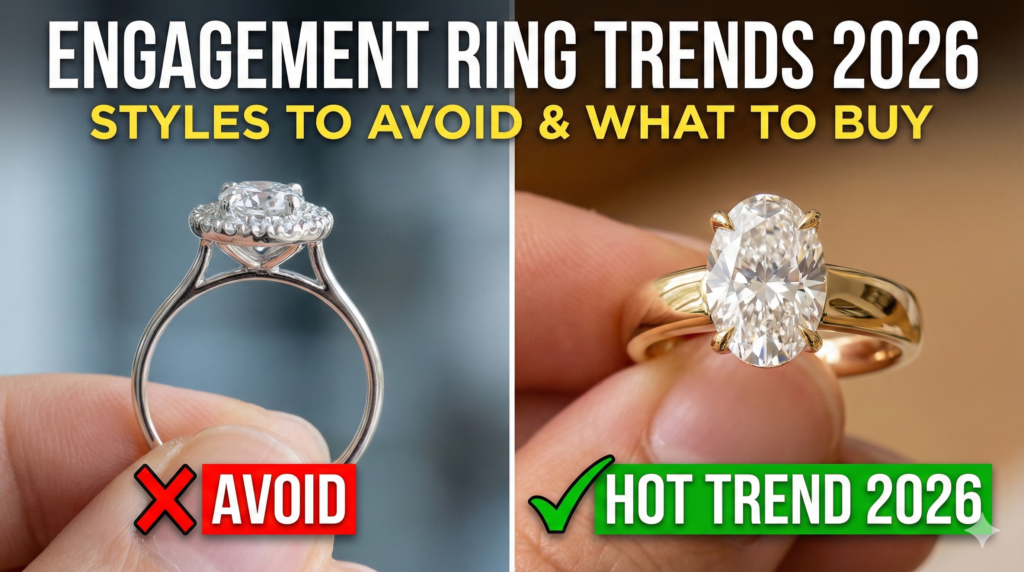
The engagement ring you choose today isn’t just for the proposal—it’s a piece of jewelry intended to be worn every single day for decades. While “timeless” is always the goal, 2026 has brought a distinct shift in what buyers actually prioritize. We are seeing a move away from the hyper-delicate, fragile designs of the early 2020s toward bolder, more structural, and personalized rings that can withstand daily life.
This year, budget plays a massive role in trend adoption. The widespread acceptance of lab-grown diamonds has flipped the script, allowing couples to prioritize higher carat weights and intricate settings without the traditional luxury markup. Whether you are looking for a durable low-profile setting or a statement solitaire, understanding current trends helps you maximize your budget and avoid styles that may look dated (or break) in a few years.
Here is a breakdown of the 7 engagement ring trends dominating 2026, backed by current market shifts and buyer demand.
Top Engagement Ring Trends 2026 Buyers Are Choosing
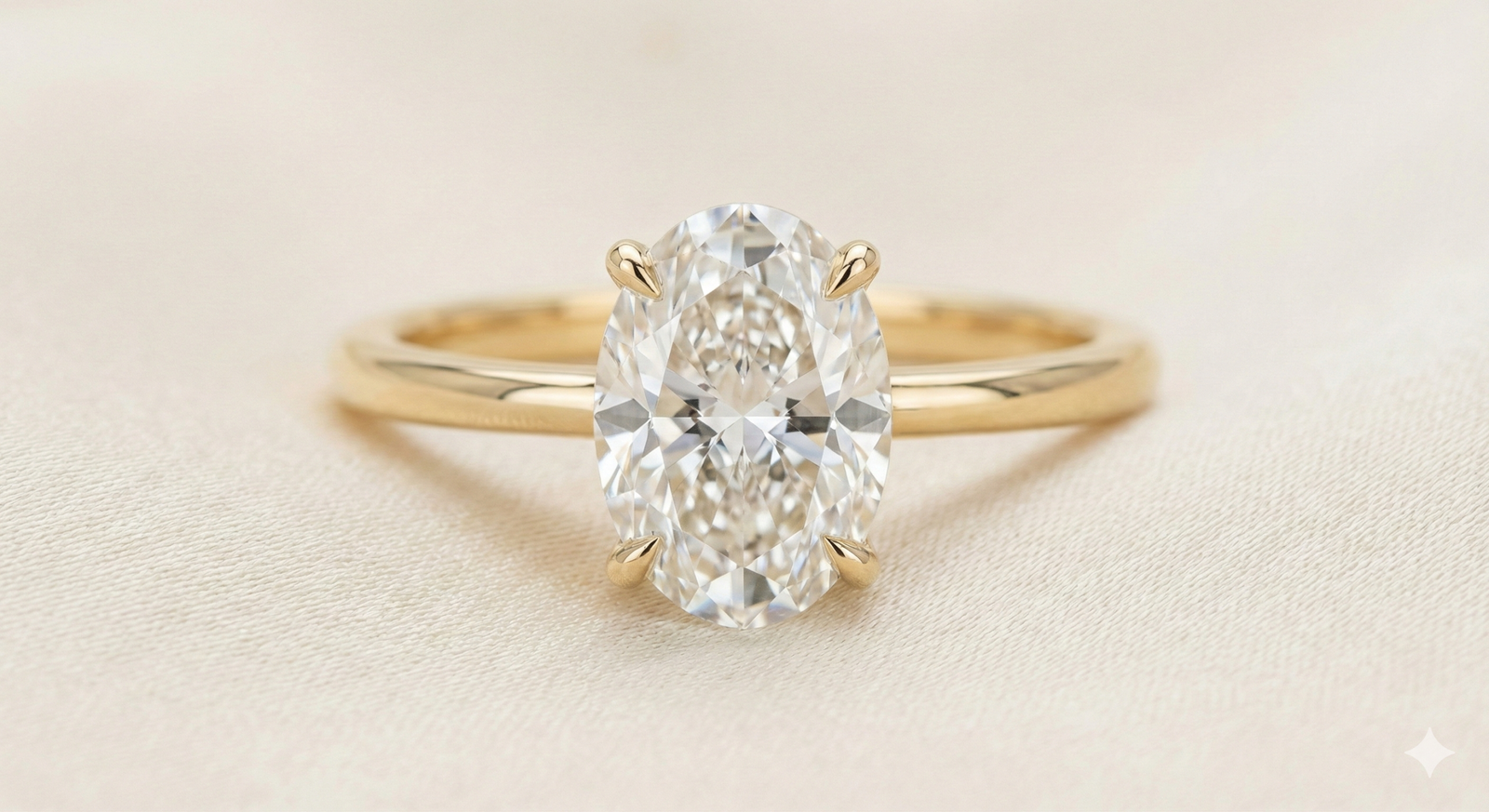
1. The Elongated Oval Solitaire
Oval diamonds have reigned supreme for several years, and they show no sign of stopping in 2026. However, the specific style of oval has evolved. Buyers are now looking for “moval” cuts (a hybrid between marquise and oval) or classic ovals with higher length-to-width ratios, creating a slender, finger-lengthening effect. The focus is on the stone itself, often held by “compass prongs” (North-South-East-West orientation) rather than the traditional four corners.
- Why it’s trending in 2026: It offers the most “finger coverage” per carat, making the diamond appear larger than round cuts of the same weight.
- Best For: Buyers who want a celebrity-inspired look that maximizes visual size.
- Pros: Very flattering on all finger shapes; hides color well (good for yellow gold).
- Cons: Look out for the “bow-tie” effect (a dark shadow in the center) common in lower-quality cuts.
- Average Price Range: $1,800 – $4,500 (Lab-Grown, 1.5–2.5ct)
2. Lab-Grown Diamond Rings (The New Standard)
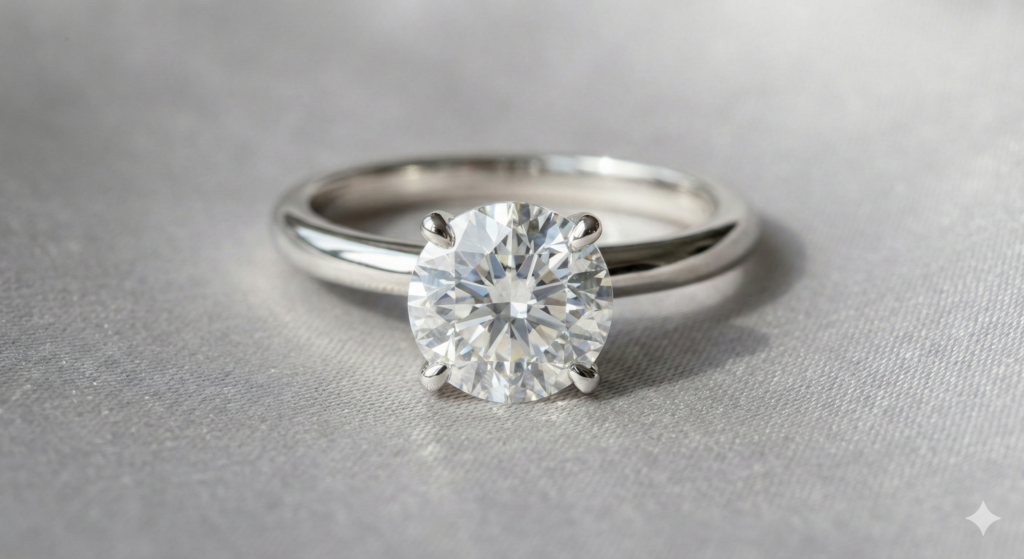
In 2026, lab-grown diamonds have effectively become the default choice for first-time buyers under 35. The stigma is gone. These are chemically, physically, and optically identical to mined diamonds but cost significantly less. The trend here isn’t just the stone—it’s the freedom it gives buyers to choose better settings and larger stones without compromising quality.
- Why it’s trending in 2026: Unbeatable value. Prices for lab-grown stones have stabilized at an accessible low, allowing couples to spend more on the honeymoon or house down payment.
- Best For: Almost everyone, especially budget-conscious buyers who prioritize “wow factor.”
- Pros: 40–60% cheaper than natural; sustainable; conflict-free.
- Cons: Resale value is lower than natural diamonds (though engagement rings are rarely bought for resale investment).
- Average Price Range: $1,200 – $3,000 (depending on carat size)
3. Minimal Solitaire with “Cigar” Bands
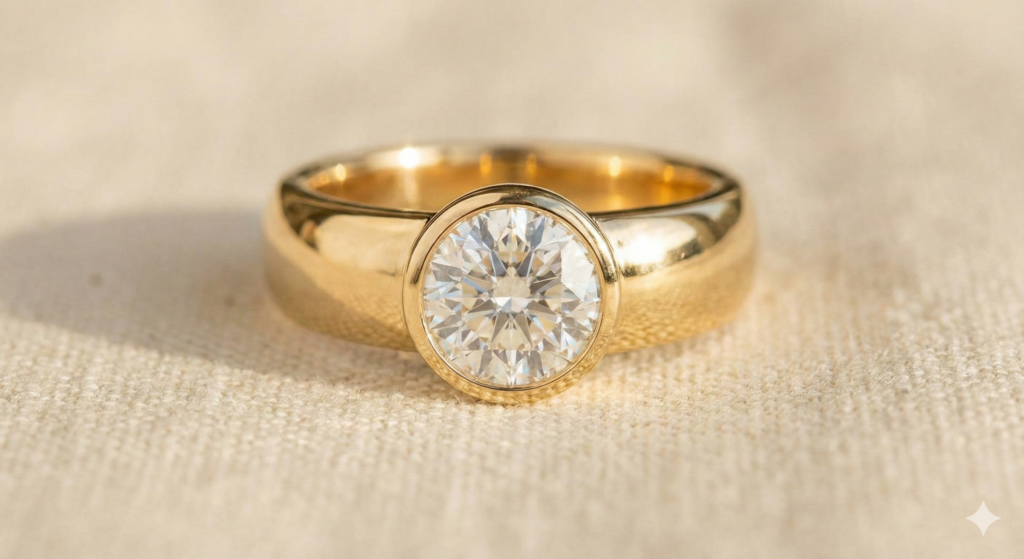
The “whisper-thin” band trend is officially fading. In its place, we are seeing a return to substantial, metal-heavy mountings. The “Cigar Band” solitaire involves a wide, often domed, gold band (3mm to 5mm+) paired with a simple center stone. This provides a modern, sculptural look that feels expensive and durable.
- Why it’s trending in 2026: It feels more “fashion-forward” and less bridal. It also addresses the durability issues of the ultra-thin bands that became popular in 2022.
- Best For: Minimalists who want a ring that feels solid and substantial.
- Pros: Extremely durable; won’t bend or warp; stands out without needing pavé diamonds.
- Cons: Thicker bands can feel tight; resizing can be slightly more difficult with very wide bands.
- Average Price Range: $1,500 – $2,800
4. Hidden Halo Engagement Rings
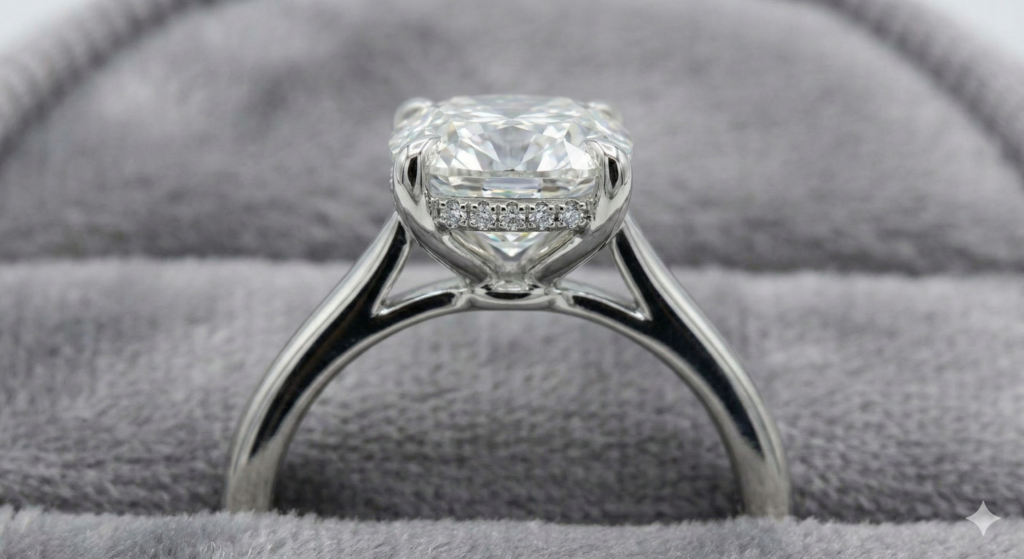
The “Hidden Halo” remains the number one requested design detail for 2026. Unlike a traditional halo that circles the top of the diamond, a hidden halo sits below the girdle (the diamond’s edge), visible only from the side profile. It adds sparkle without altering the silhouette of the center stone.
- Why it’s trending in 2026: It satisfies the urge for extra sparkle while maintaining the clean look of a solitaire from the top down. It flatters the diamond without making the ring look “cluttered.”
- Best For: Detail-oriented buyers who want a secret touch of luxury.
- Pros: Makes the diamond sparkle from side angles; adds intricacy without bulk.
- Cons: Can be difficult to clean; raised setting profile is required to see the halo.
- Average Price Range: $2,200 – $4,000
5. Yellow Gold Engagement Rings
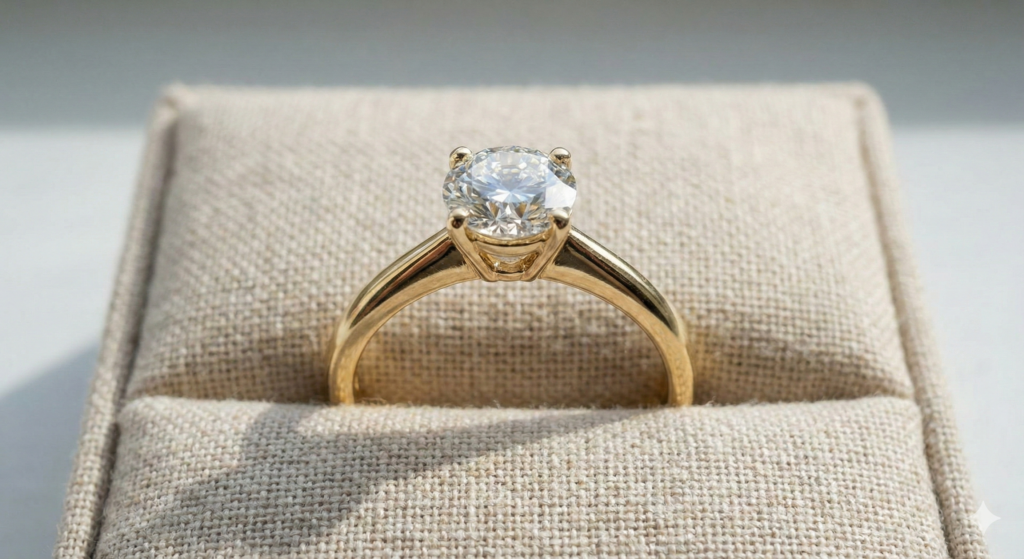
While white gold and platinum had a long reign, 18k and 14k Yellow Gold are the dominant metal choices for 2026. The warm tone contrasts beautifully with “icy” white diamonds (especially lab-grown ones with high color grades). It creates a vintage, heirloom aesthetic that feels warmer and more personal than sterile white metals.
- Why it’s trending in 2026: Gold jewelry in general is trending in fashion; engagement rings are following suit to match buyers’ existing daily jewelry stacks.
- Best For: Buyers with warm skin tones or those who wear gold jewelry daily.
- Pros: Low maintenance (doesn’t require rhodium plating like white gold); classic appeal.
- Cons: Softer than platinum (more prone to scratching); can cast a slight yellow reflection into lower-color diamonds.
- Average Price Range: $1,000 – $2,500 (Setting only)
6. East-West Diamond Settings
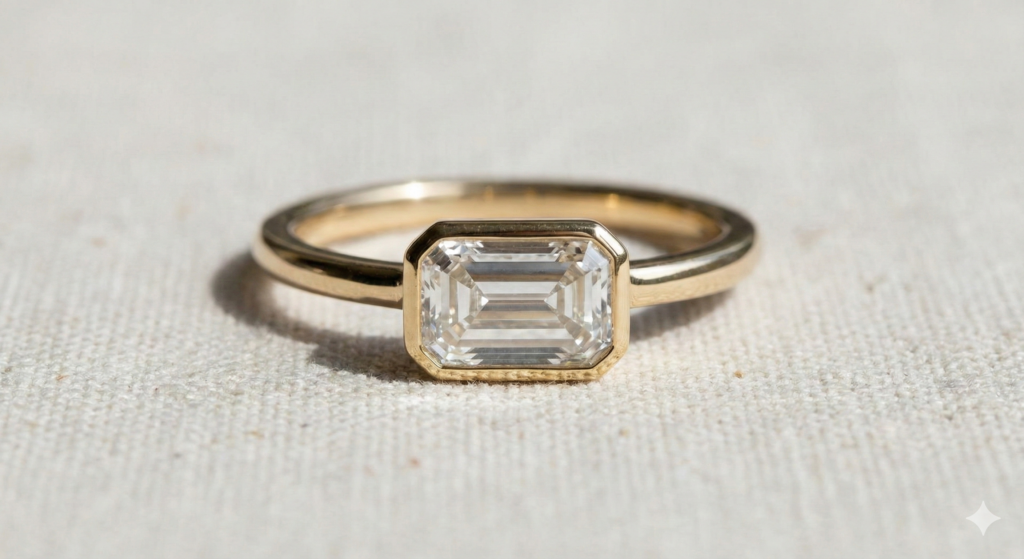
The East-West setting takes a traditional elongated shape (Oval, Emerald, or Radiant) and flips it horizontally across the finger. This is the “anti-traditional” choice for 2026. It is distinct, architectural, and instantly recognizable as a modern ring.
- Why it’s trending in 2026: It covers more width on the finger, offering a unique look without needing a custom cut. It is also practical—horizontal stones catch on clothing less often.
- Best For: The non-traditional bride and active individuals.
- Pros: Very low profile (doesn’t snag); looks unique; makes smaller carats look wider.
- Cons: Doesn’t elongate the finger as much as vertical settings; harder to stack with straight wedding bands.
- Average Price Range: $1,800 – $3,500
7. Vintage-Inspired & Art Deco Rings
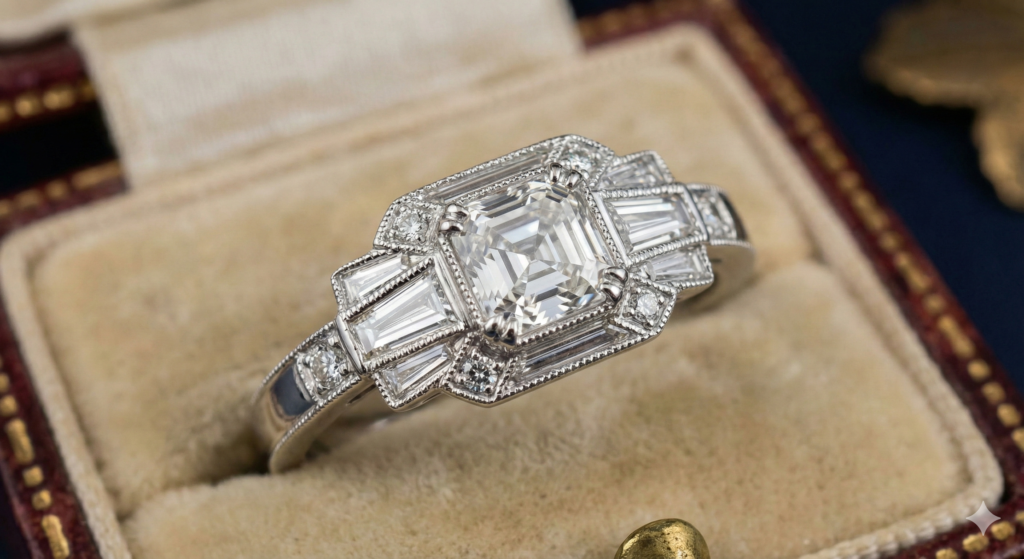
As a counter-movement to modern minimalism, there is a surge in Art Deco-inspired designs. Think geometric lines, baguette side stones, and milgrain (tiny beaded metal) edges. These rings feel like family heirlooms right out of the box.
- Why it’s trending in 2026: Buyers are seeking “character” and “romance.” This style feels unique in a sea of simple solitaires.
- Best For: Lovers of history, antique aesthetics, and intricate craftsmanship.
- Pros: Unique; hides scratches well due to detailed metalwork; often very secure settings.
- Cons: Harder to clean due to crevices; can be more expensive due to labor intensity.
- Average Price Range: $2,500 – $5,000
COMPARISON TABLE
| Trend Name | Style Look | Best For | Budget Level | Popularity 2026 |
| Elongated Oval | Glamorous, Feminine | Maximum finger coverage | Medium | ⭐⭐⭐⭐⭐ (Highest) |
| Lab-Grown | Identical to Natural | Value & Ethics | Low – Medium | ⭐⭐⭐⭐⭐ (Standard) |
| Minimal “Cigar” | Bold, Structural | Durability & Modern Style | Medium | ⭐⭐⭐⭐ |
| Hidden Halo | Secret Detail | Subtle Luxury | Medium – High | ⭐⭐⭐⭐⭐ |
| Yellow Gold | Warm, Classic | Daily Gold Wearers | Medium | ⭐⭐⭐⭐⭐ |
| East-West | Modern, Edgy | Active Lifestyles | Medium | ⭐⭐⭐ |
| Vintage/Deco | Romantic, Intricate | Unique Personality | High | ⭐⭐⭐ |
LAB-GROWN VS NATURAL DIAMONDS IN 2026 TRENDS
In 2026, the conversation between lab-grown and natural diamonds has shifted from “Is it real?” to “What do I value?”
Why Lab-Grown Dominates Trends:
The trends listed above—specifically large Ovals and intricate East-West settings—rely on high-quality cuts and clarity. Achieving these looks with natural diamonds often requires a budget of $15,000+. With lab-grown diamonds, the same visual impact is achievable for $2,500–$4,000. This price accessibility drives the trend cycle, allowing younger buyers to “afford the trend.”
The Price Gap:
- 1 Carat Natural: Approx. $5,000 – $8,000+
- 1 Carat Lab-Grown: Approx. $800 – $1,500
- Visual Difference: To the naked eye, there is zero difference. Even jewelers require specialized equipment to distinguish them.
Who Should Choose Natural?
Natural diamonds are now purchased primarily for sentimental value, tradition, or as a store of concentrated wealth (though resale markets vary). If the idea of a gemstone formed by the earth over billions of years is emotionally significant to you, natural is the right choice. For pure aesthetics and budget management, lab-grown wins in 2026.
ENGAGEMENT RING STYLES DECLINING IN 2026
While the trends above are soaring, a few styles are seeing a sharp decline in interest this year.
- Overdesigned “Super” Halos: Large, chunky halos that try to compensate for a small center stone are out. Buyers prefer a smaller, high-quality solitaire or a hidden halo over a bulky top-facing halo.
- Whisper-Thin Bands (Under 1.5mm): These looked great on Instagram in 2022, but the reality set in: they bend and warp easily. Jewelers are advising against them, and buyers are listening.
- High-Set Peg Heads: Settings where the diamond sits extremely high off the finger (looking like it’s floating on a stick) are being swapped for “cathedral” settings or lower baskets. High settings are impractical for the active lifestyles of modern couples.
HOW TO CHOOSE THE RIGHT TREND FOR YOU
Trends are a great starting point, but your ring needs to fit your life.
- Check Your Lifestyle: If you work with your hands, wear gloves, or are very active, avoid high-set Ovals. Opt for a Bezel or East-West setting that protects the stone edges.
- Finger Shape:
- Short fingers: Vertical cuts like Oval, Pear, or Marquise elongate the hand.
- Long fingers: Emerald cuts and East-West settings look elegant and balanced.
- Metal Choice: Match the metal to the jewelry you already wear. If you wear an Apple Watch with a gold band or gold hoop earrings, a Yellow Gold engagement ring will integrate seamlessly.
- Budget Allocation: If you are on a strict budget, choose a Lab-Grown stone and put the saved money into a high-quality, durable setting. You can always upgrade the stone later, but the setting is the structural foundation.
FAQs
1. What is the most popular engagement ring in 2026?
The most popular specific style is a 1.5 to 2.5-carat Lab-Grown Oval Diamond set in Yellow Gold with a Hidden Halo. This combination captures all the major trends of the year: warm metal, elongated shape, and hidden detail.
2. Are lab-grown diamond rings worth it?
Yes, if your goal is to get the best-looking diamond for your budget. They are durable (10/10 on Mohs scale), identical to mined diamonds, and cost significantly less. They are not “investments” for resale, but neither are most natural engagement rings.
3. Which engagement ring style lasts the longest?
A Bezel setting (where metal surrounds the diamond rim) or a six-prong solitaire with a band width of at least 1.8mm. These styles protect the diamond and prevent the band from warping over decades of wear.
4. Is Rose Gold still in style for 2026?
Rose gold has stabilized as a niche choice. It is less popular than Yellow Gold or Platinum in 2026 but remains a beautiful, romantic option for those with pink undertones in their skin. It is no longer “trendy,” but it is a valid “classic.”
5. How much should I spend on an engagement ring in 2026?
The “3 months’ salary” rule is dead. In 2026, most couples spend between $2,500 and $6,000. The rise of lab-grown diamonds means you can get a spectacular ring at the lower end of that spectrum.
6. What are “Compass Prongs”?
Compass prongs are a setting style where the prongs hold the diamond at the North, South, East, and West points (top, bottom, left, right) rather than the four corners. It gives round and oval diamonds a modern, cleaner look and is very popular this year.
CONCLUSION
Engagement ring trends in 2026 are defined by a mix of practicality and bold aesthetics. Whether you gravitate toward the architectural look of an East-West setting, the maximize-your-budget appeal of lab-grown ovals, or the warmth of yellow gold, the market has shifted to favor the buyer.
The days of following rigid rules about how much to spend or what a ring “should” look like are over. The best ring for you is one that fits your budget comfortably and survives your daily routine intact. Focus on durable band widths, protective settings, and a stone that makes you smile every time you look down at your hand.